
English| EUR
Suggested for you
More currencies
Choose a language
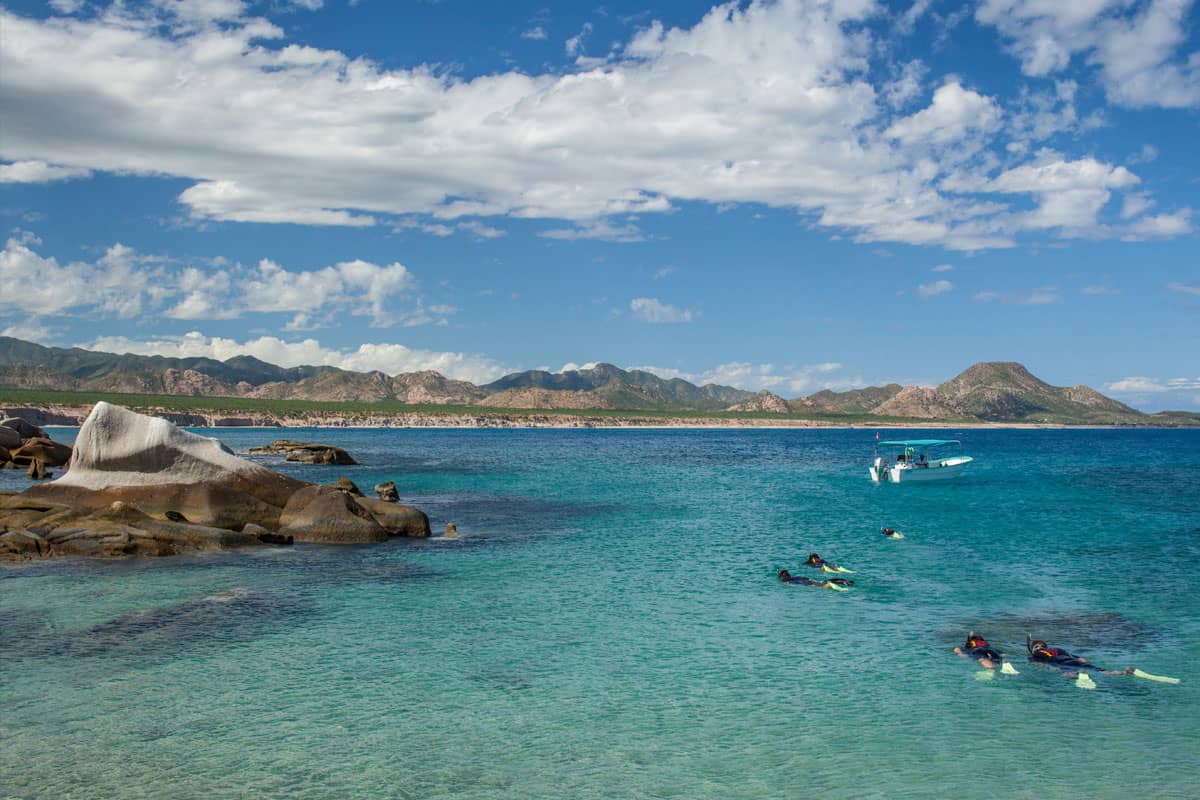
Cabo Pulmo National Park permits shore-based snorkeling from designated beach access zones along its 7-kilometer coastline. Most visitors enter from the main village beach (Playa Cabo Pulmo) or the northern La Sirenita stretch, where the reef structure begins 15–30 meters from shore.
Quick answer
Shore snorkeling at Cabo Pulmo is permitted from designated beach entry zones during park hours (08:00–18:00 daily). The main village beach offers the easiest access, with coral formations visible 15–30 meters offshore in water depths of 2–6 meters. Calmer seas and clearer visibility occur before 11:00, when morning light illuminates the reef and afternoon winds have not yet stirred the sand. A 125 MXN conservation fee applies per person.
Cabo Pulmo holds the oldest living coral reef in the Sea of Cortez—a 20,000-year-old formation that survived because the sandy bottom provided no anchorage for fishing boats. Walking into the water from the main village beach places you above boulder coral and brain coral colonies within five fin kicks. The reef structure runs parallel to shore in three distinct bands. The shallow inner band sits in 2–3 meters of water, populated by sergeant majors, king angelfish, and juvenile parrotfish that graze on algae-covered rock. The mid-band at 4–5 meters depth holds larger coral heads where pufferfish and triggerfish shelter. The outer band drops to 6–8 meters and marks the edge of the protected marine zone, frequented by schools of jacks, snappers, and occasional sea turtles. Shore-based snorkeling grants access to the inner and mid-bands without requiring a guide or panga boat. Entry from La Sirenita, 800 meters north of the village, requires a rockier descent but places you directly over hard coral plateaus. The reef slope here is steeper, reaching 5 meters within 20 meters of shore. Current flow increases past midday as thermal winds from the desert interior meet the cooler Gulf waters, reducing visibility from the typical 12–18 meters to 6–10 meters and stirring sediment. The conservation fee supports patrol operations and reef monitoring conducted by CONANP biologists stationed in the village. Cabo pulmo snorkeling from shore requires reef-safe sunscreen (mineral-based zinc or titanium dioxide), as chemical filters damage coral polyps. The park prohibits touching, standing on, or collecting any marine life. Fins prevent accidental coral contact when repositioning. Most swimmers stay within 50 meters of shore, where the sandy channels between coral formations provide safe rest zones and the depth allows quick surface returns.
“The reef structure runs parallel to shore in three distinct bands, each holding different coral formations and fish populations.”
The best arrival window is 08:00–11:00, as this period offers calmer seas and superior visibility before the afternoon winds increase. Planning your visit within this timeframe ensures the most stable conditions for entering the water directly from the shore.
—
Best for avoiding surge and securing beach space.
Warm, 75°F–80°F
Waters are calmest with high visibility.
Warm, 78°F–82°F
Water temperatures remain high following summer.
Verdict: For the best shore snorkeling, aim for weekday mornings during May or October, arriving strictly between 08:00 and 11:00.
Shore snorkeling at Cabo Pulmo requires selecting an entry point suited to your comfort level and understanding basic park access procedures. The entire process from arrival to water entry takes 20–30 minutes.
Follow Highway 1 south from San José del Cabo, then take the signed gravel road east for 8 km to reach the coastal settlement. Park in designated areas near the beach access points—driving onto sand is prohibited.
Playa Arbolito offers the easiest shore entry with calm, shallow water and immediate reef access within 10 meters of the beach. Playa Los Arbolitos and Playa La Sirena are alternative entry points but require longer swims to reach deeper coral zones.
Present identification and complete the visitor log at the entrance station before accessing any beach. Many visitors skip this step and face delays when rangers patrol the shoreline.
Wade in through clear sand patches between rock formations to avoid damaging coral and minimize risk of cuts. Rocky scrambles are common mistakes—wait for wave lulls and use designated entry zones marked by local dive shops.
Stay in waist-deep water for the first 20 meters to adjust your mask and confirm your buoyancy before heading to the reef drop-off. Beginners often swim straight out and struggle to return against currents when fatigued.
Cabo Pulmo National Park is open daily to accommodate visitors planning to snorkel from the shore.
Cabo Pulmo National Park enforces strict conservation protocols to protect one of the oldest living coral reefs in North America. Shore snorkelers must follow marine protection guidelines that preserve the reef ecosystem for future visitors.
Cabo Pulmo has minimal facilities, so prepare everything in advance for a self-guided shore snorkel.
Everything you need to know about cabo pulmo snorkeling from shore
While visitors can access the beach, shore snorkeling is restricted to designated areas to protect the coral reefs. It is advised to observe all park boundaries to ensure the preservation of the local marine ecosystem. Navigating these protected waters often requires awareness of current local regulations.
The best arrival window is 08:00–11:00 to enjoy calmer seas and better visibility before afternoon winds arrive. Visiting during these morning hours typically offers the most favorable conditions for observing aquatic life. Always check local weather forecasts before heading out to the coast.
Yes, all visitors must pay an entrance fee of 125 MXN per person, which serves as a conservation contribution for the park. This fee supports the ongoing protection and monitoring of the reefs. Please ensure you have the correct currency available upon arrival at the park entrance.
There are no professional lifeguards stationed directly on the beaches, so visitors must exercise personal caution at all times. It is essential to be a confident swimmer and remain aware of changing water conditions throughout your visit. Staying within your comfort level is vital when exploring the shoreline independently.
Children are welcome to visit, but they must be closely supervised at all times due to the lack of lifeguards and varying water depths. Engaging in water activities with minors requires careful assessment of current ocean conditions. Safety should always remain the top priority when bringing families to this protected area.
Snorkelers should bring their own mask, snorkel, and fins, as rentals are not always available directly on the beach. Wearing a life vest or buoyancy aid is strongly encouraged for safety, especially for those not accustomed to open water. Having reliable gear enhances your ability to explore the underwater beauty of the Baja California Sur region safely.